

Future of Work
Author
Elisha Roodt
Date Published
A Glimpse into a New Digital Workplace Paradigm
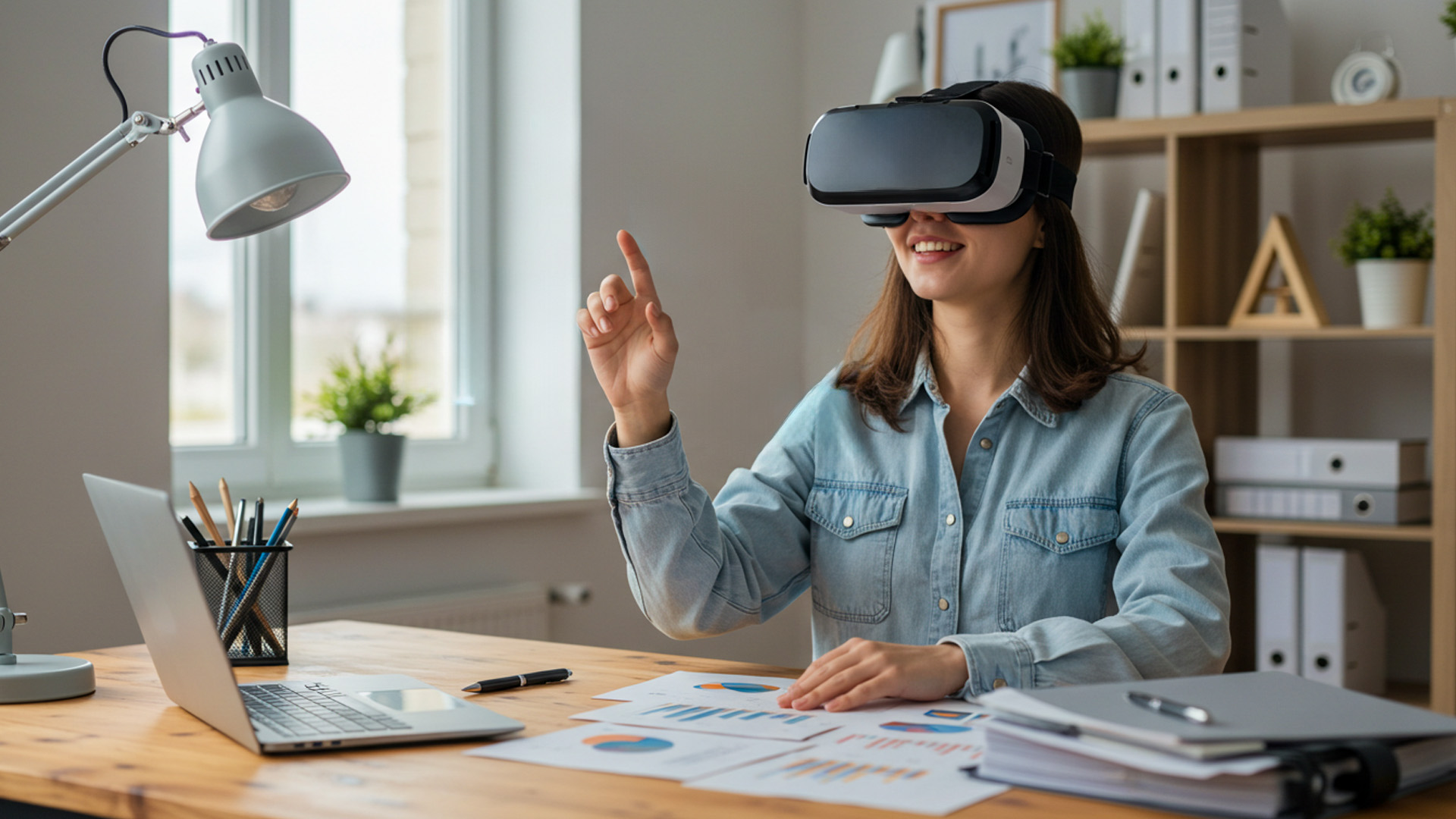
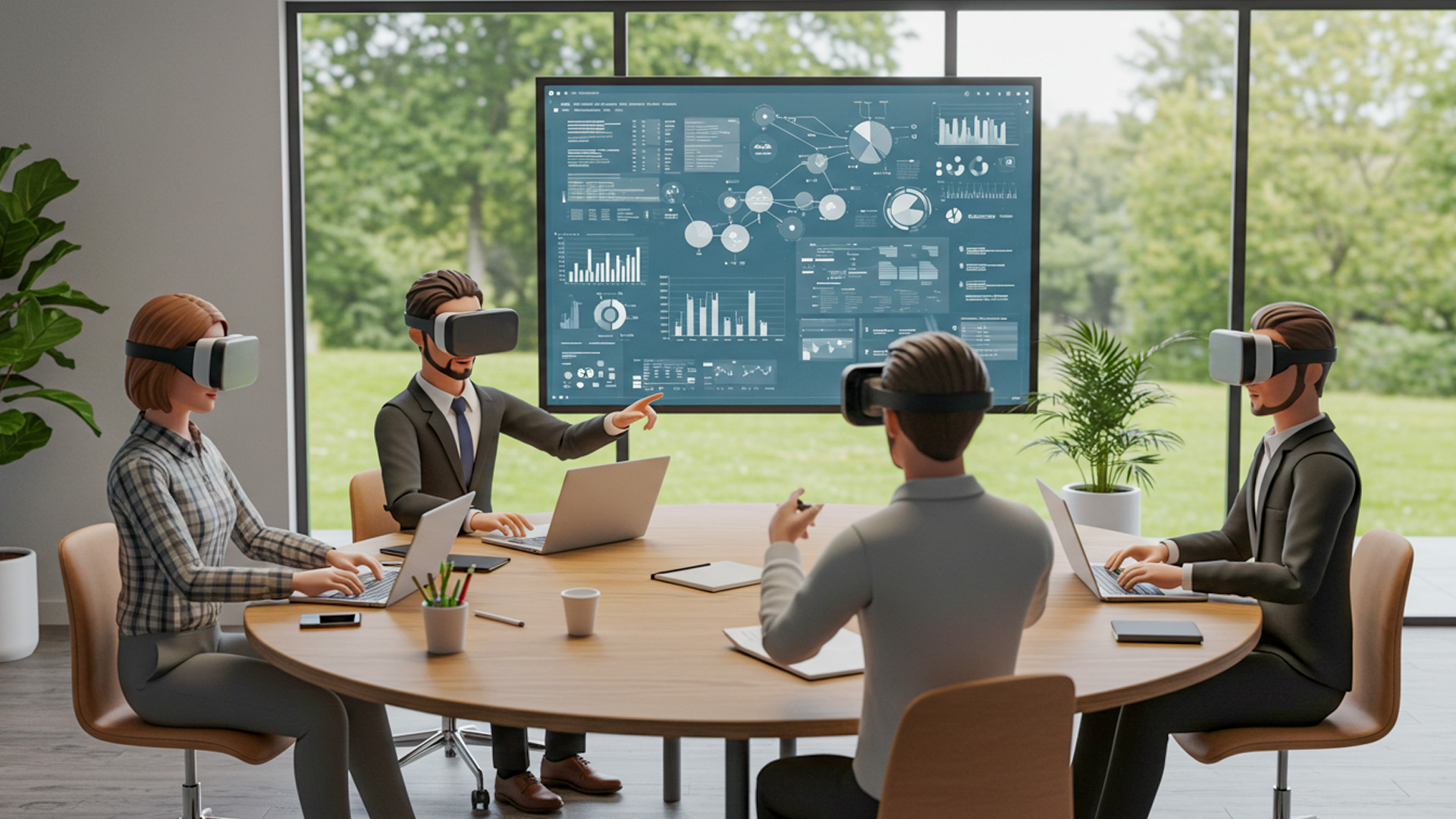
Imagine stepping into your office not by commuting through traffic, but by slipping on a VR headset. Your colleagues from across continents materialize around a virtual table, interactive dashboards float above your desk, and brainstorming sessions unfold in immersive spaces rather than sterile video grids. This is not a futuristic daydream but a vision unfolding rapidly as companies experiment with virtual offices and VR collaboration. As the boundaries of geography blur, the future of work is being redefined by immersive technology, promising deeper engagement but also presenting complex challenges in adoption, accessibility, and human connection.
Why Companies Are Exploring VR Workplaces
The Need for Presence Beyond the Screen
In traditional video conferencing, employees often feel like flat tiles on a screen—detached and distant. VR alters this dynamic by simulating spatial presence, enabling participants to read body language, eye contact, and subtle gestures in ways impossible on a Zoom call. A design team can huddle around a 3D model, pointing, reshaping, and annotating it together, as if they were gathered in the same studio. This heightened sense of co-presence reintroduces nuances of human interaction lost in digital communication, providing a psychological closeness critical for teamwork and trust.
The metaphor often used is that of moving from postcards to travel. Video calls are the postcards—flat representations of a moment. VR is the travel—the actual immersion into the environment. For companies managing globally distributed teams, this leap from postcards to presence represents not just novelty, but a tool to restore cohesion, creativity, and emotional intelligence in collaboration.
Beyond Cost Savings: Innovation as a Driver
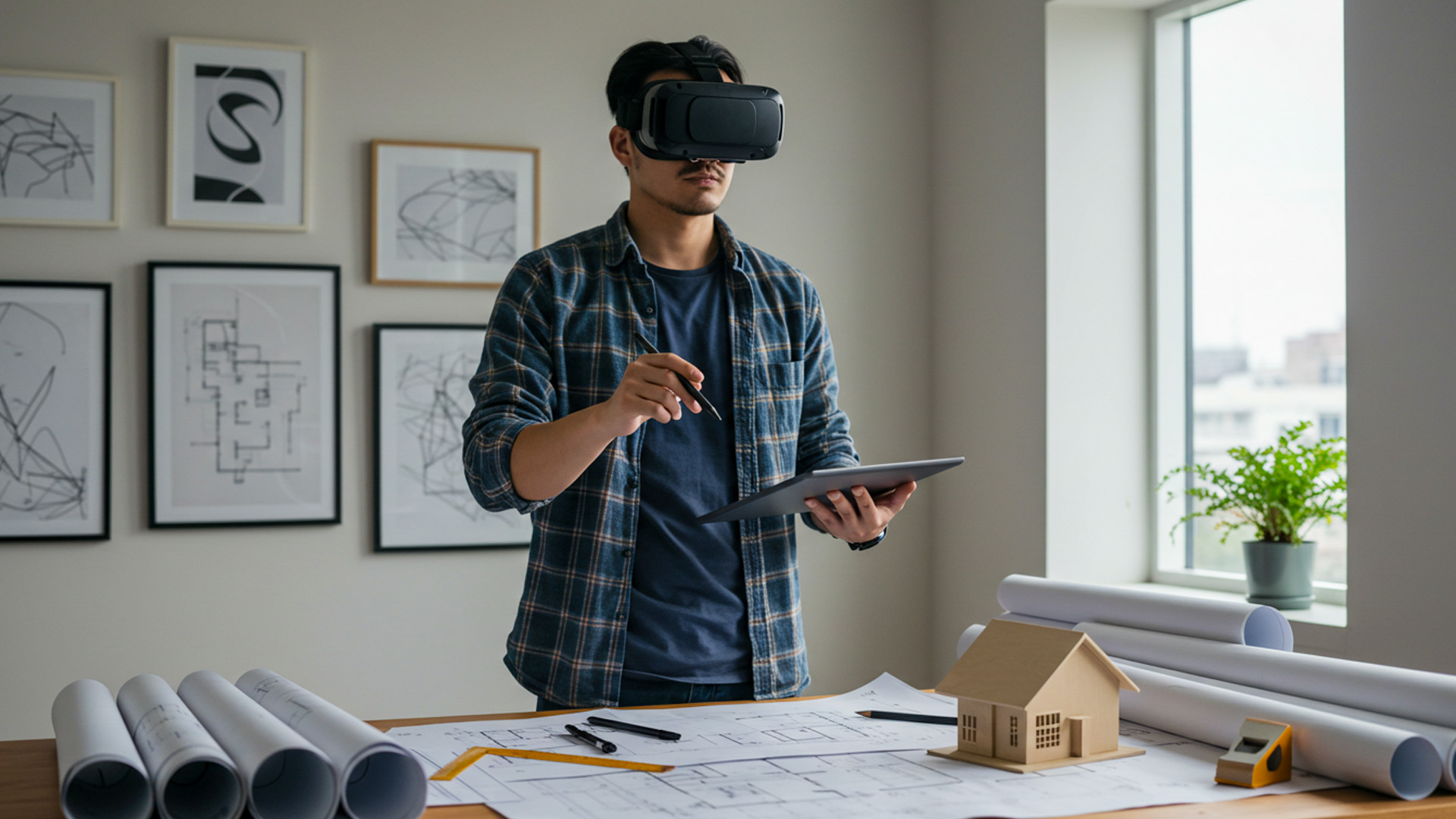
Businesses initially adopted remote work models for cost reduction—saving on office space, commutes, and travel budgets. But VR offices bring something beyond financial efficiency: they catalyze innovation. Imagine a pharmaceutical firm running molecular simulations inside a shared virtual lab, or an architectural firm enabling clients to “walk through” designs before foundations are laid. These scenarios turn abstract ideas into visceral experiences, speeding decision-making and amplifying imagination. The real competitive edge lies in faster iteration and the ability to co-create in spaces unrestricted by physics or geography.
Innovation in VR workplaces is akin to discovering new wings for an airplane in flight. Traditional digital tools simply streamlined old workflows, but immersive environments reconfigure the very architecture of collaboration. This explains why tech-forward companies are not just experimenting, but investing heavily in VR ecosystems as strategic infrastructure rather than experimental novelties.
Recruitment, Retention, and Global Talent
As competition for skilled talent intensifies, companies offering VR workspaces gain an unexpected advantage: the ability to recruit globally without relocation barriers. A software engineer in Nairobi, a designer in São Paulo, and a strategist in Berlin can all walk into the same virtual meeting room daily. This flexibility not only widens the talent pool but also improves retention. Employees who feel included and connected are less likely to churn, even in remote arrangements. VR offices add a sense of belonging that transcends Slack messages or disjointed emails.
Think of it as a digital campus where proximity is no longer bound by zip codes. Just as universities use campuses to foster identity, companies can use virtual campuses to cultivate loyalty and culture. The future may see “VR onboarding ceremonies” or “virtual company towns,” echoing the tight-knit social structures that once thrived in physical office parks.
The Tools Enabling Virtual Collaboration
Immersive Platforms and Virtual Office Suites
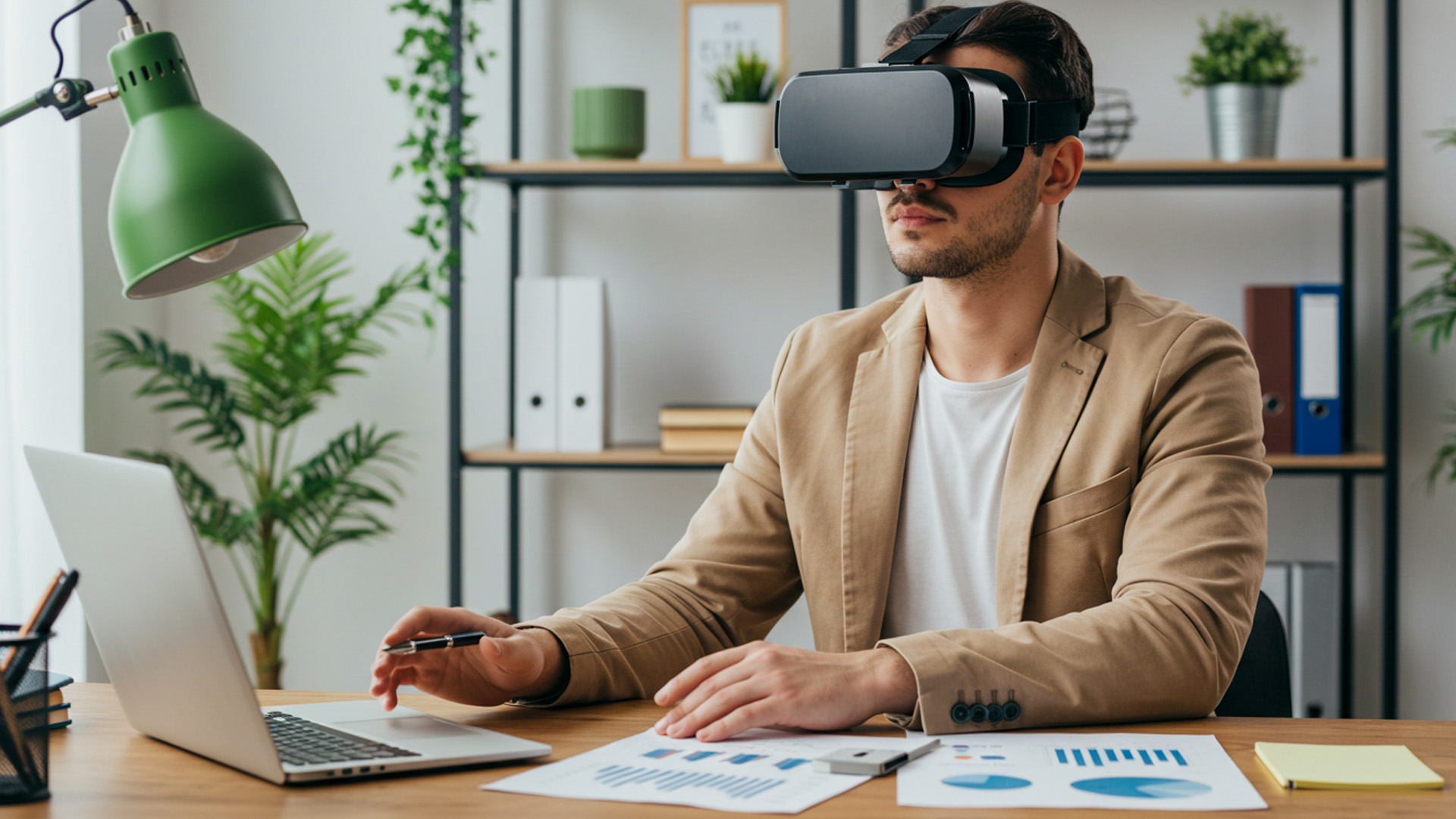
Companies are adopting purpose-built platforms like Meta Horizon Workrooms, Spatial, and Virbela, each designed to simulate office environments with spatial audio, customizable avatars, and persistent workspaces. These platforms replace sterile video grids with interactive meeting rooms where screens float, whiteboards stretch infinitely, and prototypes can be manipulated like physical objects. Some even integrate with existing productivity tools, syncing calendars, tasks, and files to bridge the gap between virtual immersion and conventional workflows.
The analogy here is moving from text-based chatrooms of the 1990s to modern social media networks. Early remote tools were functional but clunky, while VR office suites aim for intuitive, natural engagement. The challenge lies not in availability but in adoption—convincing organizations that these platforms are not just gimmicks, but powerful instruments to reshape collaboration.
Hardware: Headsets, Haptics, and Beyond
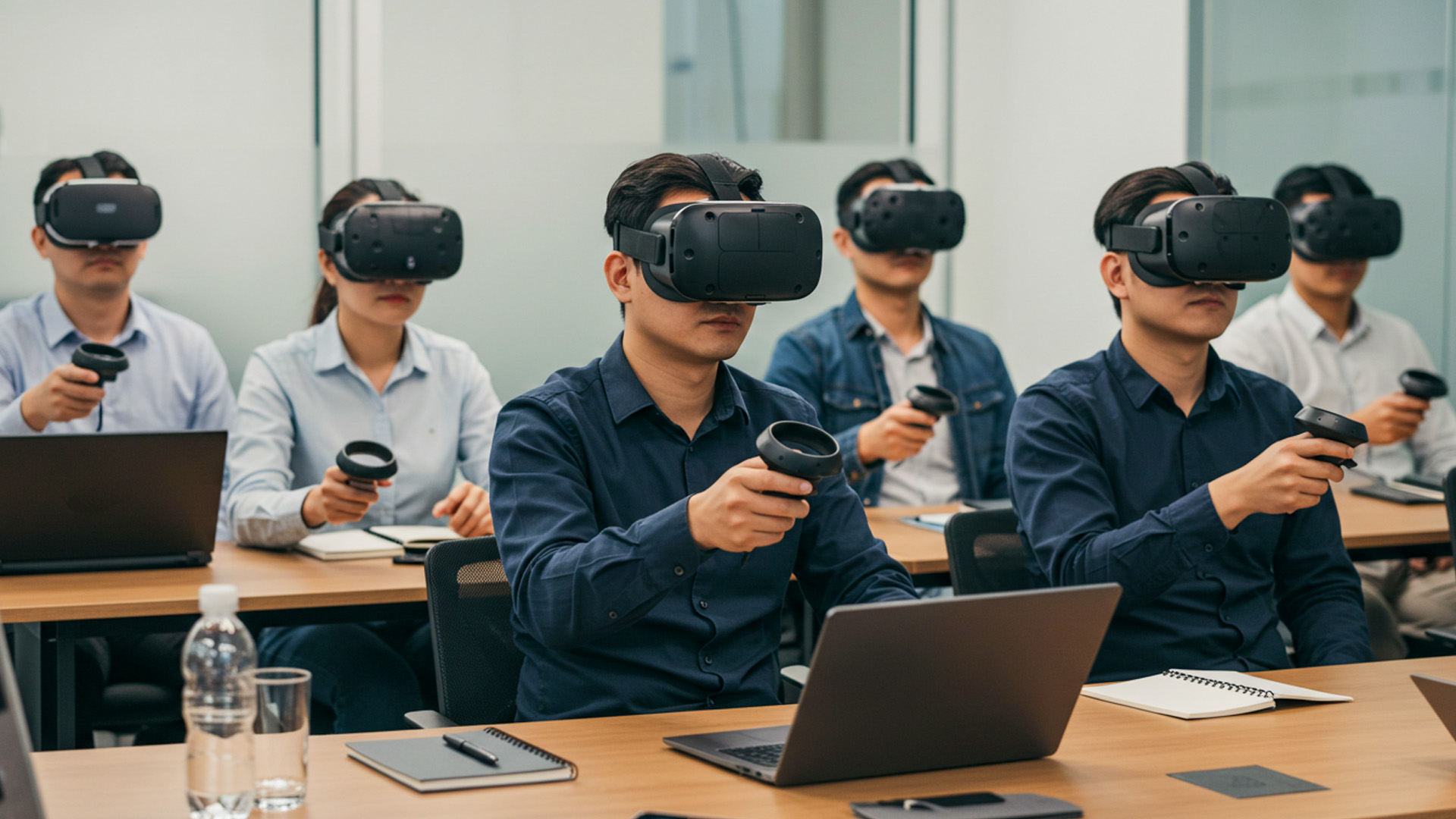
Immersive collaboration depends heavily on hardware. Lightweight VR headsets like Meta Quest 3 or Apple Vision Pro are reducing barriers with better resolution, comfort, and portability. Complementing these are haptic gloves and spatial tracking sensors, which allow users to “feel” virtual objects or gesture naturally during conversations. As these tools evolve, the friction of immersion decreases, making VR offices feel less like science fiction and more like routine work tools, akin to laptops and smartphones today.
Widespread adoption still wrestles with price points, battery life, and accessibility. Asking every employee to don headsets daily may feel intrusive, especially for those with motion sickness or ergonomic concerns. Overcoming these barriers requires continuous hardware refinement—much like early mobile phones evolving from bulky bricks to sleek pocket devices that became indispensable.
Integration with Traditional Tools
No VR office can exist in isolation. Effective platforms integrate seamlessly with Slack, Microsoft Teams, Google Workspace, and project management software. This interoperability ensures that while immersive sessions happen in 3D, tasks, files, and communications remain synchronized with traditional 2D systems. It is this hybrid model that allows companies to transition gradually, blending the strengths of both dimensions without alienating employees unfamiliar with VR.
Think of VR as a new wing of the workplace, not a replacement of the old one. The integration resembles airports connected by highways—without the roads, airports would be inaccessible. Likewise, without integration, VR offices risk becoming isolated islands, fascinating but impractical for daily workflows. Smart companies focus less on novelty and more on these connective tissues of productivity.
Challenges in Adopting VR Workspaces
Accessibility and Equity Concerns
One of the most pressing issues is equity. High-end VR headsets and stable broadband connections remain luxuries in many regions. If virtual offices become mandatory, employees in low-resource settings could be disadvantaged, widening the digital divide. Even within well-resourced companies, not all employees are equally comfortable with immersive tech. Disabilities, vision impairments, or motion-related conditions may exclude some from full participation, risking workplace inequity.
Organizations must proactively design inclusive strategies, such as offering non-VR participation modes or subsidizing equipment. The analogy is clear: requiring VR without accommodations is like mandating all employees to climb stairs without installing elevators. Equity in immersive workspaces will determine whether VR becomes a truly democratizing force or a barrier that fragments the workforce further.
The Cognitive and Physical Strain of Immersion
Extended VR sessions can be cognitively exhausting. Unlike passive video calls, immersive environments demand constant attention—gesturing, turning, reacting in 3D space. Prolonged headset use also introduces physical strain on eyes, necks, and backs, raising questions about ergonomics. Employees may embrace VR meetings enthusiastically at first, only to retreat if fatigue outweighs benefits. This creates a paradox: the more immersive the tool, the greater its risk of burnout if not carefully managed.
Companies experimenting with VR must learn from gaming ergonomics—encouraging breaks, calibrating environments for comfort, and setting session limits. Just as factories introduced safety protocols for machinery, VR workplaces will require “digital ergonomics handbooks” to safeguard employee well-being in immersive environments.
Cultural Resistance and Organizational Change
Perhaps the most formidable barrier is cultural. Employees accustomed to email and video calls may perceive VR offices as disruptive or unnecessary. Leadership hesitancy amplifies this resistance—without executive buy-in, immersive collaboration risks being sidelined as a quirky experiment. Change management, therefore, becomes as critical as the technology itself. Organizations must articulate not only the “how” but the “why” of VR adoption to inspire confidence and curiosity.
History offers parallels: when email was first introduced, many professionals resisted, preferring memos or phone calls. Over time, email became indispensable. VR faces a similar trajectory. The challenge lies in guiding teams across the chasm of skepticism toward eventual normalization, with storytelling, training, and clear demonstrations of value serving as the bridges.
The Road Ahead: Hybrid Futures of Work
Blending Physical, Digital, and Virtual
The likely future is not an all-or-nothing embrace of VR but a hybrid ecosystem where physical, digital, and virtual offices coexist. A product launch might involve a physical press event, supplemented by a VR showroom for remote journalists and a digital archive for global audiences. Each modality complements the other, creating a layered strategy of engagement. VR, in this model, becomes a force multiplier rather than a solitary pillar of the workplace.
This convergence echoes the evolution of media itself. Just as radio did not replace newspapers, and television did not annihilate radio, VR will not erase physical offices. Instead, it will carve its niche, transforming specific scenarios where immersion and co-presence yield unmatched value.
The Emergence of Virtual Corporate Culture
Virtual workplaces open new horizons for corporate culture. Picture virtual team-building exercises in fantastical environments—solving escape-room puzzles on a Martian colony or brainstorming product ideas while strolling through a simulated rainforest. Such experiences forge bonds beyond what office happy hours or online quizzes could ever deliver. Over time, rituals, celebrations, and social dynamics will evolve uniquely within these immersive spaces, creating “virtual folklore” that shapes organizational identity.
This is not far-fetched. Online gaming communities already exhibit strong cultures with hierarchies, traditions, and shared narratives. Virtual offices will likely mirror this phenomenon, embedding playful yet purposeful elements into daily workflows and redefining what it means to “belong” to a company.
Policy, Governance, and Ethical Horizons
As VR workspaces scale, questions of governance will rise. How do companies handle virtual misconduct? What policies protect employee privacy in environments where every gesture and gaze can be tracked? Who owns the intellectual property of work created inside proprietary virtual platforms? These concerns echo the early days of internet governance, where rules lagged behind innovation. Crafting ethical, legal, and organizational frameworks will be as crucial as building technical infrastructure.
In many ways, VR offices are the Wild West of corporate landscapes—rich with opportunity but also rife with risks. Companies that proactively draft policies and ethical guidelines will set precedents, while laggards may stumble into crises. The future of VR collaboration will depend not only on technology’s brilliance but also on humanity’s wisdom in shaping its use.
Hybrid Futures Of Work